FITT COMMUNITY UPDATE
Future Intelligence Think Tank
Reaches 1,500 Members on LinkedIn
Future Intelligence Think Tank (FITT) reached 1,500 LinkedIn members by 24 November 2026, a 50% increase since the group passed 1,000 members on 13 September. Launched by ASSIST Software in 2025, FITT is an open community where people from different fields discuss human and artificial intelligence and what new technologies mean for their work, education and culture.
Software engineers and founders take part alongside professors, researchers, students and people working in healthcare, finance, consulting and the arts. What someone has learned in one field can be useful to a person facing a similar problem in another. An engineering team working out how to train junior developers, for example, has something in common with a lecturer designing an assignment: both want to know what people are learning when a tool can get them to an answer faster.
The growth has come alongside active discussion. For the week reported on 15 November, LinkedIn recorded 88 new members, up 44% from the previous week, and 9,336 post views.
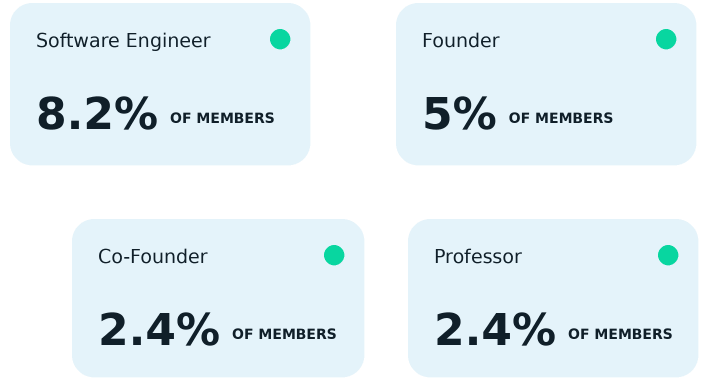
Analytics date range: 16 September - 23 November
From a LinkedIn discussion to a question worth testing
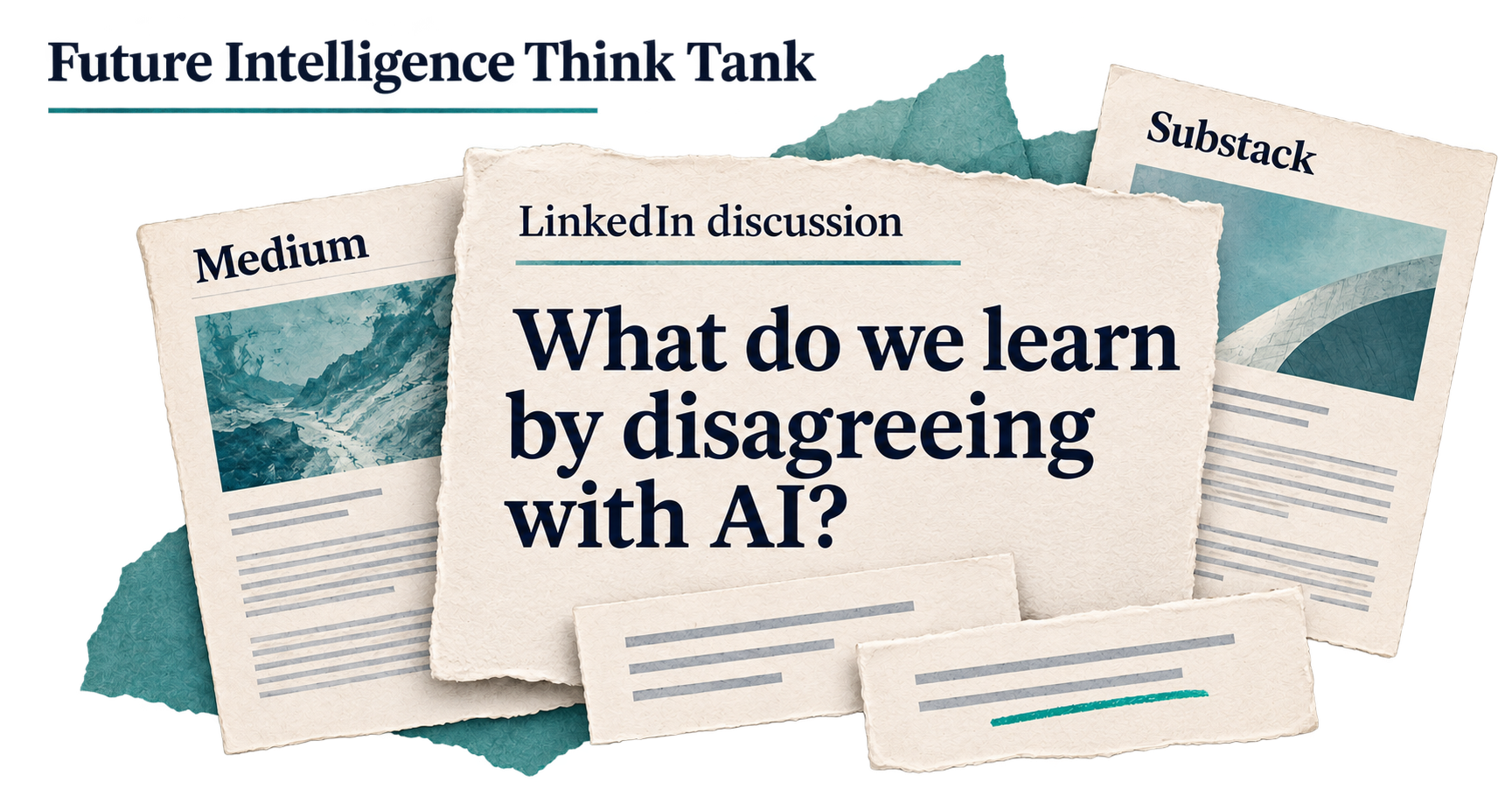
Gheorghe David brought a Stanford study of nearly 250,000 conversations with Claude to the group. The researchers found that challenging an AI assistant’s reasoning was one of the more productive ways people responded when a conversation ran into trouble. For David, that raised a question about how we use these tools in the first place: are we looking for someone to challenge our thinking or confirm what we already believe?
Christian Steidle picked up on what happens after the chat ends. He suggested giving someone a different problem later, without AI, and seeing whether they could spot a weak assumption or ask for missing evidence on their own. That gives a teacher or a team lead something concrete to look for. A person may leave the first task with a better answer. The second task tells you more about what they can do for themselves.
FITT developed the discussion into a Medium article about why it can pay to argue back with AI. On Substack, the community publishes longer pieces that draw on several discussions at once. One edition brings together questions about professional skills, investment in AI infrastructure and what changes when autonomous systems begin making decisions in the physical world. Read FITT on Medium · Read FITT on Substack
Three faculties at Ștefan cel Mare University of Suceava feature FITT
Three faculties have introduced Future Intelligence Think Tank to their academic communities. The Faculty of Economics, Administration and Business (FEAA) focused on how AI and automation affect jobs, investment and business decisions. The Faculty of Electrical Engineering and Computer Science (FIESC) invited students, lecturers and researchers to discuss how emerging technologies affect society. The Faculty of Mechanical Engineering, Automotive and Robotics (FIMAR) highlighted robotics and the opportunity to exchange ideas with people working in the field.
A professor can share a research finding and hear how it applies in industry. A student can bring a question from a course or project and see how someone working in the field would approach it. Practitioners can take those questions back to their own teams.
Join Future Intelligence Think Tank
Whatever your background or level of experience with AI, you’re welcome to take part. Start with something you know well, something you’ve noticed changing or a question you’d like to hear people from other fields answer. You can start a discussion or add an example to one already underway.
Your perspective is welcome
We warmly invite you to join the Future Intelligence Think Tank LinkedIn group and add your perspective to the conversations exploring human and artificial intelligence.
Join FITT on LinkedInFrequently asked questions about
Future Intelligence Think Tank
Future Intelligence Think Tank is an open professional community rather than a traditional research institute. Hosted on LinkedIn, it connects practical experience, academic research and informed analysis of artificial intelligence, human intelligence and emerging technology.
Posts are assessed for relevance, credibility and potential value to the community. Contributors are expected to distinguish evidence from opinion, identify their sources and engage respectfully with questions or opposing perspectives.
Members can publish original analysis, research findings, lessons from AI projects, industry observations and questions that invite informed discussion. Commercial expertise is welcome when it contributes knowledge rather than functioning as advertising.
Yes. Professionals may contribute insights from their organizations, research institutions or industries. Posts should explain the wider relevance of the work and disclose any connection to the projects, products or organizations being discussed.
No. Posts and comments represent the views of their individual contributors. Publication within Future Intelligence Think Tank does not imply endorsement by the community, its management team or ASSIST Software.
Current conversations and member contributions are published in the Future Intelligence Think Tank LinkedIn group. Selected ideas and longer analyses are also developed into articles available through ASSIST Software on Medium and Substack.
Yes. Joining and participating in the LinkedIn group is free. Members can follow existing conversations, respond to other contributors or introduce a relevant question of their own.
AI tools may support research, analysis or writing, but posts should reflect the contributor’s own judgment. Authors remain responsible for verifying factual claims, citing original sources and providing the professional context needed for meaningful discussion.
Future Intelligence Think Tank is a public LinkedIn community for professionals exploring human and artificial intelligence.
Information
Community information reviewed in September 2026.
© 2026 ASSIST Software
Privacy & Cookie Policy